


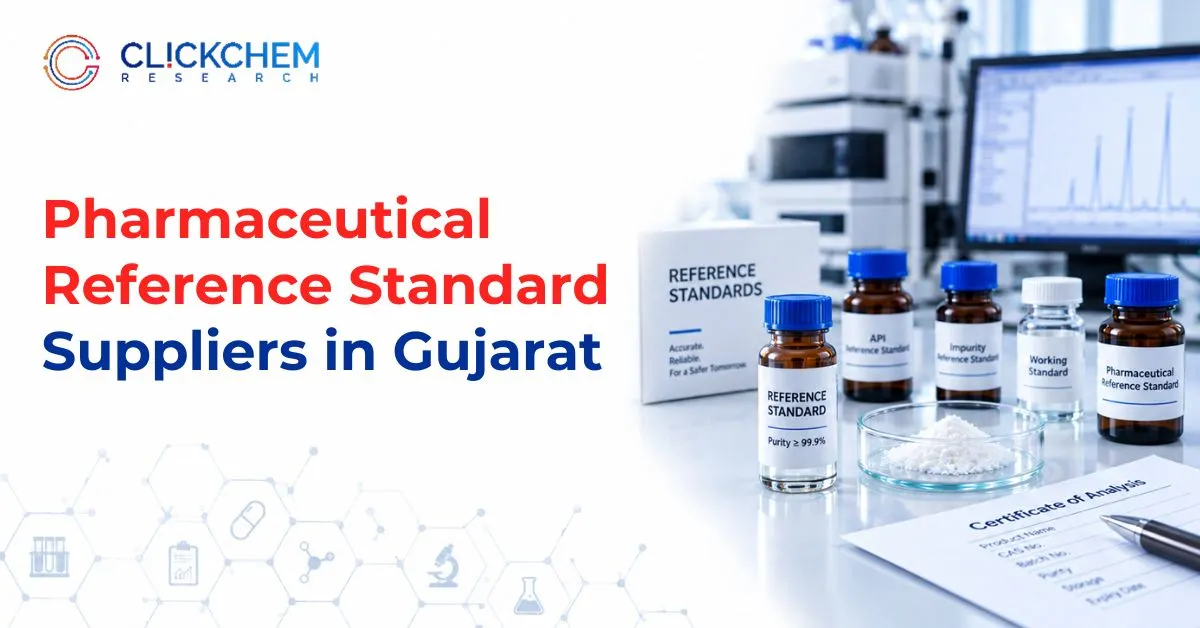
Pharmaceutical testing depends on reliable materials for identification, purity assessment, analytical method development, and quality control. A pharmaceutical reference standard provides a defined material against which pharmaceutical substances or impurities can be evaluated. For pharmaceutical companies, laboratories, and research organizations, choosing a dependable supplier is important for obtaining consistent quality, appropriate documentation, and analytical support.
What Is a Pharmaceutical Reference Standard?
A pharmaceutical reference standard is a characterized material used as a comparison reference during pharmaceutical analysis. It can support testing for identification, assay, impurity profiling, calibration, and analytical method validation.
Depending on the application, reference standards may include API reference standards, impurity standards, degradation products, metabolites, and other analytical reference materials. Reliable characterization helps laboratories obtain meaningful and reproducible analytical results.
What to Look in Pharmaceutical Reference Standard?
When evaluating pharmaceutical reference standard suppliers in Gujarat, buyers should consider more than product availability. The supplier’s synthesis, purification, characterization, and documentation capabilities can directly affect the usefulness of the standard.
Key factors include:
- Purity and characterization: Analytical data should support the identity and quality of the material.
- Documentation: Certificates of analysis and relevant analytical reports can simplify laboratory and quality-control activities.
- Custom synthesis capability: Some projects require specific impurities, metabolites, or reference materials that may not be readily available.
- Purification facilities: Techniques such as preparative HPLC can help obtain highly purified reference materials.
- Analytical support: HPLC, LC-MS, NMR, FTIR, HRMS, and other techniques may be required for characterization.
Types of Pharmaceutical Reference Standards
Different analytical requirements call for different types of reference materials. A pharmaceutical reference standard may be developed for an API, process-related impurity, degradation product, metabolite, or other pharmaceutical compound.
Common categories include:
| Type | Typical Application |
| API Reference Standards | Identification, assay and calibration |
| Impurity Standards | Impurity profiling and related-substance testing |
| Degradation Standards | Stability and degradation studies |
| Metabolite Standards | Research and analytical investigations |
| Working/Secondary Standards | Routine quality-control testing |
Why Custom Reference Standard Development Matters?
Not every analytical requirement can be addressed using commercially available materials. Custom development can be useful when a laboratory needs a specific impurity, degradation product, metabolite, or research compound.
A supplier offering pharmaceutical reference standard development can support activities such as custom synthesis, purification, structural characterization, and analytical evaluation. This can be particularly relevant for pharmaceutical development, stability studies, method validation, and quality investigations.
For complex requirements, custom synthesis services can provide a route from compound development through purification and characterization.
Need pharmaceutical reference standards or custom impurity standards?
Contact us to discuss your specific analytical requirements.
Importance of Purification and Characterization
Purity and structural confirmation are important when reference materials are used for analytical comparison. Depending on the compound, purification may involve preparative HPLC, flash chromatography, recrystallization, or chiral purification.
Analytical techniques such as HPLC, LC-MS, NMR, FTIR, and HRMS can support identity and purity assessment. For challenging compounds or unknown impurities, isolation and structure elucidation services can provide additional analytical support.
Choose Reference Standards Based on Your Analytical Requirements
Selecting a supplier should begin with the intended analytical application, required compound, purity expectations, quantity, characterization requirements, and documentation needs. Suppliers with synthesis, purification, and analytical capabilities can be better positioned to handle customized requirements.
For organizations sourcing pharmaceutical reference materials in Gujarat, evaluating technical capabilities alongside product availability can help establish a suitable and consistent supply process.
Frequently Asked Questions
What is a pharmaceutical reference standard used for?
It is used as a comparison material for pharmaceutical testing, including identification, assay, impurity profiling, calibration, and analytical method validation.
What types of reference standards are available?
Common types include API standards, impurity standards, degradation products, metabolites, and working or secondary standards.
Can pharmaceutical reference standards be custom synthesized?
Yes. Custom synthesis can be used to develop specific impurities, metabolites, degradation products, and other pharmaceutical reference materials according to project requirements.
Why is purification important for reference standards?
Purification helps remove unwanted components and obtain material suitable for analytical applications where purity and consistency are important.
Which analytical techniques can characterize reference standards?
Depending on the compound, techniques can include HPLC, LC-MS, NMR, FTIR, HRMS, GC, and other suitable analytical methods.
Conclusion
A reliable pharmaceutical reference standard is an important component of pharmaceutical analysis, quality control, research, and method development. When selecting suppliers in Gujarat, organizations should evaluate not only the availability of reference materials but also their synthesis, purification, characterization, and documentation capabilities. For specialized requirements, custom development and analytical support can help address complex impurity and reference-material needs.
 +91-8140031133