

Impurities can appear in pharmaceutical substances at different stages of drug development and manufacturing. Some are introduced during chemical synthesis or processing, while others form when an API or finished product breaks down because of environmental or storage conditions. Understanding this difference is important for impurity profiling, analytical testing, and quality control. Reference Standards provide characterized materials that help laboratories identify and quantify specific impurities during pharmaceutical analysis. Although both process and degradation impurities require careful monitoring, their origins, investigation methods, and control strategies can differ significantly. Knowing how these impurity categories compare helps pharmaceutical manufacturers and analytical laboratories develop appropriate testing approaches and maintain consistent product quality.
What Are Process Impurities?
Process impurities are unwanted substances that can be introduced during the synthesis or manufacturing of an API. They may result from incomplete reactions, side reactions, starting materials, intermediates, reagents, catalysts, or process conditions. Reference Standards can help laboratories identify and evaluate these compounds during analytical testing and impurity profiling.
When evaluating process impurities, laboratories may investigate:
- Unreacted starting materials
- Reaction intermediates
- Side products
- Process-related by-products
- Residual reagents or catalysts
Proper process control and analytical monitoring can help reduce their formation and maintain the required quality of the API.
Looking for impurity synthesis, isolation, purification, or analytical characterization support?
Contact us to discuss your pharmaceutical research requirements.
What Are Degradation Impurities?
Degradation impurities form when an API or pharmaceutical product undergoes chemical or physical changes over time. Factors such as temperature, humidity, light, oxygen, and pH can contribute to degradation. Reference Standards can help laboratories identify and evaluate these compounds during analytical testing and stability investigations.
During degradation impurities investigations, laboratories may evaluate:
- Oxidation products
- Hydrolysis products
- Photodegradation products
- Thermal degradation products
- Other stability-related compounds
These impurities are particularly important during stability and forced-degradation studies.
Process Impurities vs Degradation Impurities
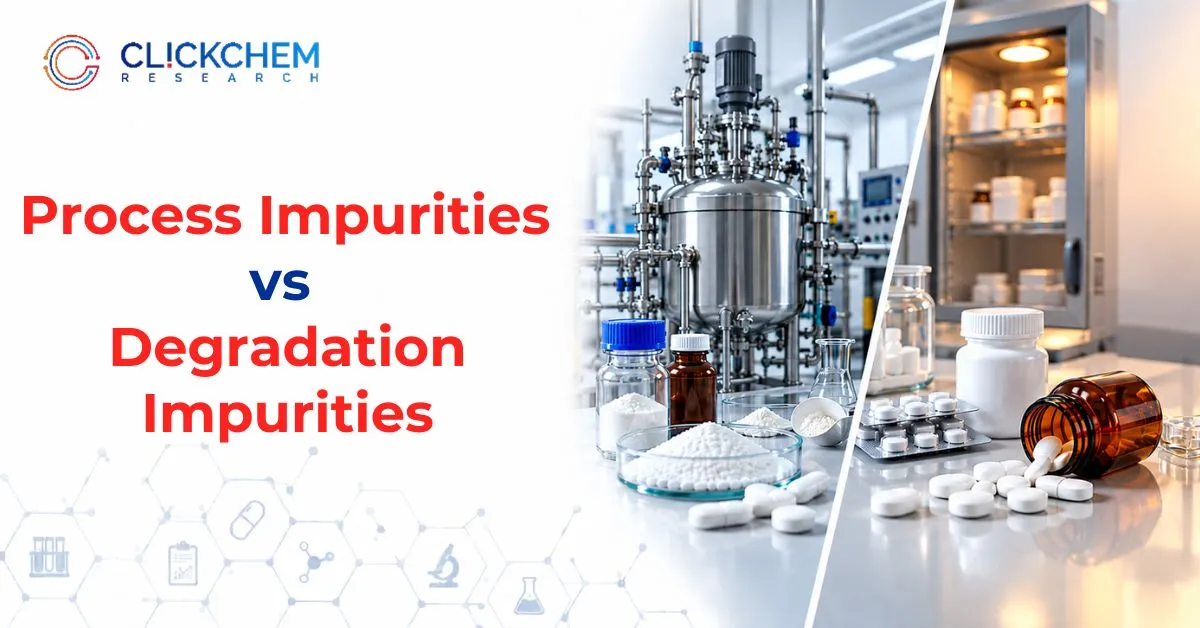
The primary difference is their source and formation mechanism. Process impurities are generally associated with manufacturing chemistry, whereas degradation impurities develop when a pharmaceutical substance changes during storage, handling, or exposure to stress conditions. Reference Standards can support the analytical identification and evaluation of these impurities by providing characterized materials for comparison.
| Factor | Process Impurities | Degradation Impurities |
| Main source | Manufacturing process | Chemical or physical degradation |
| Formation | During synthesis or processing | During storage or stress conditions |
| Common investigation | Process monitoring | Stability studies |
| Control approach | Process optimization | Stability and packaging controls |
| Analytical focus | Reaction-related compounds | Degradation products |
Both categories require appropriate analytical methods for reliable detection and evaluation.
Why Are Reference Standards Important?
Accurate impurity identification requires reliable comparison materials. Reference Standards can help laboratories compare known impurity compounds with analytical peaks detected in samples.
They may support:
- Impurity identification
- Quantification
- Method development
- Method validation
- Stability studies
- Quality control
At Clickchem Research LLP, capabilities include pharmaceutical impurity synthesis, purification, isolation, and analytical characterization to support pharmaceutical research and testing requirements.
How Are These Impurities Analyzed?
Analytical techniques such as HPLC, LC-MS, GC, NMR, FTIR, and HRMS can be used depending on the compound and investigation. HPLC is commonly applied for impurity profiling, while mass spectrometry and spectroscopic techniques can provide additional information about molecular identity and structure. Reference Standards can also support accurate comparison and identification during pharmaceutical impurity analysis.
Selecting suitable analytical methods depends on the impurity characteristics, sample matrix, required sensitivity, and purpose of the study.
Why Does the Difference Matter?
Distinguishing between process and degradation impurities helps pharmaceutical teams determine where an impurity originated and how it should be controlled. Process-related findings may indicate a need for reaction or purification improvements, while degradation findings may require changes to storage conditions, formulation, packaging, or stability controls.
A clear understanding of pharmaceutical impurities therefore supports better quality decisions throughout drug development.
Frequently Asked Questions
What are process impurities?
Process impurities are unwanted substances formed or introduced during API synthesis and manufacturing. They can include starting materials, intermediates, side products, and residues from the manufacturing process.
What are degradation impurities?
Degradation impurities are compounds formed when an API or pharmaceutical product changes due to factors such as heat, moisture, light, oxygen, or other environmental conditions.
What is the main difference between process and degradation impurities?
Process impurities generally originate from manufacturing chemistry, while degradation impurities develop through chemical or physical changes during storage, handling, or stress conditions.
Are reference standards used for impurity testing?
Yes. Reference Standards can provide characterized comparison materials that support impurity identification, quantification, analytical method development, and validation.
Which analytical techniques are used for impurity analysis?
Depending on the project, laboratories may use HPLC, LC-MS, GC, NMR, FTIR, and HRMS to detect, identify, quantify, and characterize impurities.
Conclusion
Understanding the difference between process and degradation impurities is important for pharmaceutical development, manufacturing, and quality control. Process impurities are generally linked to synthesis and manufacturing activities, while degradation impurities result from changes occurring during storage or exposure to environmental stress. Both require suitable analytical investigation and appropriate control strategies. Reliable Reference Standards can support accurate impurity identification and quantitative analysis, helping laboratories generate dependable analytical results. With capabilities in impurity synthesis, purification, isolation, and characterization, Clickchem Research LLP can support pharmaceutical research requirements involving complex impurity investigations and analytical studies.
 +91-8140031133