

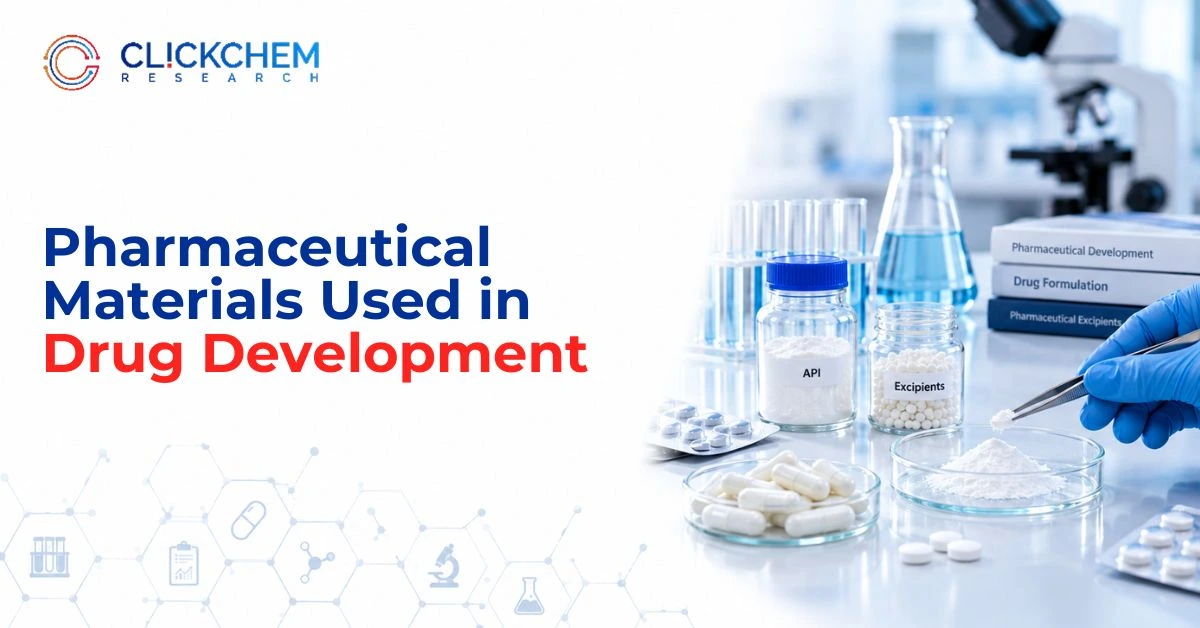
Drug development involves much more than discovering a potential medicine. Researchers require different chemical compounds and materials to support synthesis, testing, analysis, and quality evaluation throughout the development process.
Various Pharmaceutical Materials Used in Drug Development play specific roles, from creating active compounds to identifying impurities and developing reliable analytical methods. Understanding these materials helps researchers select suitable compounds for pharmaceutical research and development.
Active Pharmaceutical Ingredients and Intermediates
Active Pharmaceutical Ingredients (APIs) are the components responsible for the intended therapeutic effect of a medicine. During API development, several API intermediates and chemical building blocks may be required to complete multi-step synthesis.
Common materials include:
- Active pharmaceutical ingredients
- API intermediates
- Advanced intermediates
- Organic building blocks
- Specialty chemicals
These compounds support research activities, process development, and the synthesis of complex pharmaceutical molecules.
Why Are Pharmaceutical Impurities Important?
During synthesis, manufacturing, or storage, unwanted compounds known as pharmaceutical impurities may form. These can include process-related impurities, degradation products, metabolites, and unknown compounds.
Researchers use impurity standards to identify and study these substances during:
- Impurity profiling
- Stability studies
- Analytical testing
- Method validation
- Quality investigations
Understanding impurity profiles is an important part of maintaining reliable product quality throughout pharmaceutical development.
Pharmaceutical Reference Standards for Analytical Testing
Highly characterized compounds are used as comparison materials during laboratory analysis to support accurate identification and evaluation of pharmaceutical substances. Pharmaceutical reference standards play an important role in ensuring reliable analytical results for different testing requirements.
| Material | Role in Drug Development |
| API | Provides therapeutic activity |
| API Intermediate | Supports chemical synthesis |
| Impurity Standard | Helps investigate impurities |
| Reference Standard | Supports analytical testing |
| Specialty Chemicals | Support research applications |
These materials are commonly used in analytical method development, quality control, stability testing, and compound characterization.
Purification and Compound Characterization
Many pharmaceutical compounds require purification before they can be properly studied or used as analytical materials. Techniques such as Preparative HPLC, chromatography, and recrystallization help separate target compounds from complex mixtures.
After purification, compound characterization may involve techniques such as:
- HPLC analysis
- LC-MS analysis
- NMR spectroscopy
- HRMS analysis
- FTIR analysis
These analytical methods help researchers evaluate compound identity, purity, and structural characteristics.
Looking for specialized compounds, pharmaceutical materials, or analytical support for your project?
Contact us to discuss your specific research requirements.
Supporting Pharmaceutical Research
Modern pharmaceutical research often requires specialized materials that are not readily available commercially. Custom synthesis, impurity isolation, reference standard development, and advanced intermediate synthesis can support specific research requirements.
Clickchem Research LLP provides scientific support through custom synthesis, pharmaceutical reference standards, impurity development, purification, unknown impurity isolation, and analytical characterization services.
Frequently Asked Questions
What materials are used in drug development?
Drug development may involve APIs, API intermediates, pharmaceutical impurities, reference standards, specialty chemicals, metabolites, and other research compounds.
What are API intermediates?
API intermediates are compounds produced during different stages of chemical synthesis and used as building blocks for developing active pharmaceutical ingredients.
Why are pharmaceutical impurities studied?
Pharmaceutical impurities are studied to understand their origin, structure, and behavior during synthesis, manufacturing, and stability testing.
What are pharmaceutical reference standards used for?
Pharmaceutical reference standards support analytical testing, identification, method development, assay determination, and quality evaluation.
Why is purification important in pharmaceutical research?
Purification helps separate desired compounds from unwanted substances and supports further analysis, characterization, and research applications.
Conclusion
Different chemical compounds play important roles throughout pharmaceutical research, synthesis, testing, and analysis. APIs, intermediates, impurities, reference standards, and specialty compound each support specific stages of development.
Understanding Pharmaceutical Materials Used in Drug Development helps researchers approach synthesis and analytical challenges more effectively. With appropriate purification, characterization, and scientific evaluation, these materials continue to support reliable research and the development of complex pharmaceutical compounds.
 +91-8140031133